
Views: 0 Author: Site Editor Publish Time: 2026-10-22 Origin: Site


Piping infrastructure acts as the central nervous system of any heavy industrial facility. A single rupture in a high-pressure line triggers catastrophic downtime. It creates severe safety hazards. It bleeds capital. Engineers and procurement managers constantly battle a fundamental dilemma. They must balance upfront material costs against long-term operational reliability.
Recent market data highlights a massive shift in procurement strategies. Industrial designers are rapidly abandoning standard welded alternatives for critical paths. Why is this happening? Stricter environmental regulations in deep-water offshore drilling demand zero-leak architectures. Furthermore, the booming green hydrogen sector requires containment systems that absolutely prevent gas permeation. In these unforgiving setups, specifying a Stainless Steel Seamless Pipe serves as the definitive gold standard.
This comprehensive technical guide cuts through the metallurgical jargon. By the end of this breakdown, you will understand exactly when your project demands a seamless solution. You will learn how it directly compares to alternative tubing and how to maximize your long-term return on investment.
Unmatched Pressure Tolerance: Seamless pipes completely lack a longitudinal weld seam. This provides superior structural integrity. They are roughly 20 percent stronger than welded alternatives. This makes them mandatory for extreme high-pressure environments.
Superior Chemical Defense: The absence of a weld seam eliminates the heat-affected zone. This drastically reduces the risk of localized galvanic attacks and weld decay.
Mandatory for Hazardous Extraction: In oil and gas environments containing lethal hydrogen sulfide, seamless piping is strictly dictated by engineering codes to prevent sulfide stress cracking.
Lifecycle Cost vs. Upfront Cost: Seamless manufacturing requires a higher initial capital investment. However, its proven longevity in harsh conditions drastically reduces ongoing maintenance and premature replacement costs.
To make an informed procurement decision, buyers must first grasp the fundamental engineering principles separating seamless piping from standard tubular products. A seamless pipe is a continuous solid extrusion of metal. It contains no longitudinal or cross-sectional joints. Engineers design it specifically to absorb extreme mechanical stress without fracturing.
The creation of this piping relies on advanced metallurgical processes rather than simple sheet rolling and welding. The journey begins with a solid cylindrical steel billet. Facilities superheat this dense billet to extreme temperatures until it reaches a malleable plastic state. Industrial presses then forcefully push or draw the metal over a piercing rod to create a hollow tube.
Depending on the precise dimensional tolerances required, the hollow tube undergoes further elongation through aggressive cold drawing. The defining characteristic of this entire operation is the total absence of welding. The resulting pipe emerges as a single homogeneous cylinder of steel.
This continuous extrusion process inherently enhances the baseline properties of the stainless alloy. Common austenitic grades like 304L and 316L are frequently utilized. The L designation denotes a lower carbon content. This lower carbon stabilizes the material microstructure against carbide precipitation. Because the pipe is formed as a single piece, the distribution of vital elements like chromium and nickel remains perfectly uniform. This isotropic uniformity ensures highly predictable performance metrics for mechanical engineers.
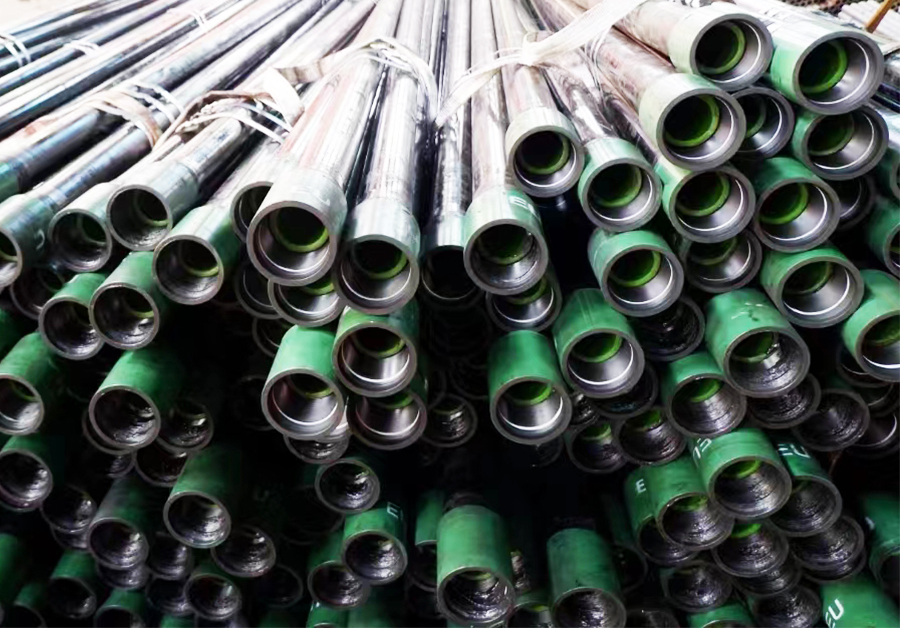
The most frequent debate within procurement teams is choosing between seamless and welded variants. Modern radiography and advanced tungsten inert gas welding have significantly improved welded pipe reliability. Nevertheless, fundamental physical differences remain.
Feature | Stainless Steel Seamless Pipe | Welded Stainless Steel Pipe |
|---|---|---|
Manufacturing Method | Extrusion and piercing of a solid steel billet | Rolled steel plate welded shut at the seam |
Pressure Rating | Handles roughly 20 percent higher internal pressure | Lower pressure threshold due to seam vulnerability |
Corrosion Risk | Uniform resistance across the entire surface | Vulnerable at the Heat-Affected Zone |
Cost & Lead Time | Higher initial capital with longer lead times | More affordable and readily available in stock |
Wall Thickness | Can be manufactured with extremely heavy walls | Limited by the thickness of the rolled steel plate |
Internal Finish | Completely smooth surface ensuring laminar flow | May possess a slight internal weld bead |
Size Availability | Preferred for smaller to medium outer diameters | Easily available in massive outer diameters |
Specifically, the primary differentiator lies in how the cylinder handles internal kinetic forces. A seamless pipe exhibits a uniform cross-section. Hoop stress distributes evenly across the metal. Without a weld seam acting as a potential stress concentrator, it safely handles significantly higher pressure loads than a welded counterpart of the exact same dimensions.
During the production of a welded pipe, the intense heat required to fuse the metal creates a localized heat-affected zone along the seam. This rapid heating and cooling cycle alters the local microstructure. It makes the seam highly susceptible to localized galvanic attacks. In contrast, seamless pipes lack this heat-affected zone. They guarantee an unbroken barrier of Corrosion Resistance across the entire infrastructure.
Welded pipes are manufactured by rapidly rolling a sheet of steel and welding it closed. This is a highly cost-effective and swift process. Conversely, the extrusion and piercing required for seamless pipes consume immense energy and time. Consequently, seamless pipes represent a larger upfront investment.
When industrial applications demand extremely thick pipe walls to withstand deep-sea crushing forces, seamless manufacturing is the only viable option. Welded pipes remain physically limited by the thickness of the steel plates that rolling machines can bend without cracking.
For critical fluid dynamics, the internal topography of a pipe is paramount. Welded pipes often possess a microscopic weld bead along the interior. Even when scarfed smooth, this bead causes minor turbulence. Seamless pipes offer a completely unobstructed internal bore. This ensures predictable fluid dynamics and prevents particulate buildup.
Justifying the premium price tag of seamless piping to tight-fisted procurement departments requires a clear articulation of its unique technical advantages. You must prove its direct impact on the total cost of ownership.
In any pressurized network, the system is only as robust as its weakest link. Historically, the longitudinal weld seam serves as the most common origin point for catastrophic ruptures. By utilizing a seamless extrusion, engineers effectively erase this primary weak point. This drastically reduces the probability of sudden leaks and associated safety hazards for plant personnel.
In hygienic industries like biopharmaceuticals, fluid purity remains an absolute mandate. Any internal crevice or rough weld bead serves as a microscopic trap for bacteria. The continuous glass-smooth internal bore of a seamless pipe prevents the accumulation of biological residue. It acts as the perfect conduit for stringent sanitary protocols.
Complex facility layouts often dictate that piping must be aggressively bent or threaded. The material must respond predictably. The uniform isotropic structure of a seamless pipe ensures it handles mechanical manipulation without failing. Welded pipes frequently split or deform unevenly at the weld seam when subjected to tight bending radii.
Choosing the right piping material requires an objective evaluation of the operational environment. The following scenarios represent conditions where specifying a seamless pipe is a strict requirement dictated by engineering codes.
In applications such as hydraulic power networks and industrial boilers, piping is subjected to terrifying internal pressures. The uniform wall thickness allows seamless pipes to absorb brutal thermal shocks and pressure spikes without risking seam fatigue.
Chemical processing plants dealing with high chloride concentrations require materials that will not degrade unpredictably. Localized corrosion almost always initiates at microscopic imperfections found in weld zones. Therefore, engineers specify seamless pipes to guarantee maximum chemical defense throughout the facility.
Standard austenitic seamless pipes are incredibly versatile. However, they are not a magic bullet for every extreme condition. When dealing with highly abrasive slurries or corrosive tailings, bare metal erodes rapidly. Instead, engineers must specify a composite solution. Integrating a plastic-steel lined pipe offers unmatched durability. For instance, high-performance lined pipes feature an ultra-high molecular weight polyethylene interior. This interior layer boasts a molecular weight exceeding 2.5 million. It provides a friction coefficient as low as 0.07 to 0.11. The outer steel shell maintains the system pressure rating, while the inner lining absorbs the abrasive impact. Furthermore, if the environment involves boiling sulfuric acids, stepping up to a specialized Alloy Pipe becomes an engineering necessity.
Understanding when to specify this material often begins by looking at the industries that have adopted it as an uncompromising standard. In sectors where fluid containment is a matter of life and death, the absence of a longitudinal weld seam provides unparalleled peace of mind.
The petrochemical sector operates in extremely unforgiving environments. Subsea umbilicals endure immense mechanical stress. Furthermore, when extracting raw petroleum containing high levels of hydrogen sulfide, the environment is classified as Sour Service. In these lethal applications, corrosion engineering standards strictly mandate seamless materials to resist sudden sulfide stress cracking.
In the pharmaceutical sector, the primary concern shifts from extreme pressure to absolute hygiene. A welded pipe possesses a heat-affected zone that can harbor microbial growth. Seamless tubing ensures unimpeded fluid dynamics. It eliminates the risk of cross-contamination in life-saving drug manufacturing.
Power generation facilities rely on complex networks of critical cooling systems. These systems frequently operate under extreme thermal cycling. A longitudinal weld seam introduces a localized area of varied metallurgical structure. This becomes a focal point for thermal fatigue. Seamless pipes ensure a uniform coefficient of thermal expansion.
Offshore oil rigs face relentless mechanical vibration and aggressive saltwater spray. Chlorides found in seawater rapidly induce pitting in standard steel. Utilizing a seamless pipe eliminates the vulnerable weld link entirely. It provides an unbroken defense against marine degradation.
For procurement managers, specifying the correct piping material requires navigating a complex matrix of industry standards and dimensional specifications. Here is how to ensure you procure exactly what your system needs.
The American Society for Testing and Materials provides globally recognized frameworks for piping specifications. When sourcing seamless pipes, you will frequently encounter specific standards. ASTM A312 serves as the most common specification for high-temperature and general corrosive service. ASTM A213 applies strictly to seamless alloy-steel boiler and heat-exchanger tubes. ASTM A269 covers seamless tubing for environments requiring reliable low-temperature flexibility.
Selecting the wrong metallurgical grade leads to rapid failure. Grade 304 is the industry standard for general-purpose piping. It handles fresh water perfectly but remains highly susceptible to chloride pitting. Grade 316 contains added molybdenum. It is vastly superior for resisting chloride-induced pitting. Duplex Stainless Steel features a mixed microstructure. It provides roughly twice the yield strength of standard austenitic grades.
Piping dimensions are standardized using Nominal Pipe Size and Pipe Schedule. The Nominal size refers to the approximate diameter. The Schedule dictates the actual wall thickness. Because seamless pipes are extruded, manufacturers can produce them with exceptionally heavy walls. Buyers must meticulously calculate their system maximum operating pressure alongside a certified mechanical engineer to specify the correct schedule.
Even seasoned engineering teams make costly errors when navigating industrial piping procurement. Avoiding these common pitfalls ensures your project remains on budget while maintaining the highest safety standards.
One of the most frequent budgetary mistakes is specifying a premium seamless pipe for low-risk applications. If your project involves transporting basic chilled water or low-pressure HVAC fluids, a high-quality welded pipe is entirely sufficient. Over-specifying drains capital that could be better allocated to critical infrastructure elsewhere.
Assuming that any seamless pipe will survive any environment is a dangerous oversight. The seamless construction provides physical structural integrity. However, the chemical resistance is entirely dependent on the alloy grade. Utilizing a basic grade in a coastal environment exposed to salt spray will inevitably lead to rust.
A standard stainless steel seamless pipe is highly versatile. Failing to recognize when an environment requires a more specialized material is a critical error. When transporting highly abrasive mining tailings, bare stainless steel will erode. In these scenarios, utilizing a UHMWPE Liner inside a carbon steel pipe provides unmatched friction and abrasion resistance that bare metal simply cannot achieve.
Specifying industrial piping ultimately comes down to rigorous risk management. Seamless extrusion is the only logical choice for demanding industrial projects where failure is not an option. High-pressure systems and lethal sour service environments demand absolute structural integrity. Seamless piping provides that unmatched safety and superior chemical defense.
When making your procurement decision, always consider the total lifecycle cost rather than just the initial purchase price. The superior long-term value and lower maintenance frequency of seamless pipes quickly offset their initial premium.
Ready to upgrade your infrastructure? Evaluate your operational parameters carefully. Explore the vast inventory of specialized fluid transport products at THX Special Steel. Our engineering team can help you select the exact seamless pipe or high-performance lined composite to optimize your complex piping systems.
Generally, a seamless pipe is 20 to 30 percent more expensive upfront than a welded pipe of the exact same grade and size. This price premium is driven by the complex energy-intensive manufacturing process required to heat and extrude a solid steel billet. However, this initial capital expenditure is frequently offset by significant savings in long-term maintenance and the elimination of expensive non-destructive testing.
Yes. It is not only highly recommended but frequently legally required. In oil and gas extraction, sour service refers to environments containing toxic hydrogen sulfide. This gas aggressively causes sulfide stress cracking along the heat-affected zones of welded pipes. Industry standards strongly advocate for seamless piping in these environments because the uniform microstructure drastically reduces the risk of sudden cracking under pressure.
These two solutions serve fundamentally different engineering purposes. A seamless pipe is engineered primarily to withstand extreme internal pressure and chemical corrosion. In contrast, an ultra-high molecular weight polyethylene liner is inserted into a standard steel pipe specifically to provide extreme abrasion resistance. If your application involves transporting highly abrasive solids like coal slurry, a polymer-lined pipe will significantly outlast bare stainless steel.
No. Seamless pipe is not universally better for every single application. The choice depends entirely on the operational parameters of the project. For low-pressure and large-diameter applications, welded pipe is vastly more cost-effective and perfectly safe. Seamless piping is only superior when the application specifically demands its unique high-performance traits.
Standard stainless steel grades are excellent for general to moderate corrosion resistance and temperatures up to approximately 1500 degrees Fahrenheit. You should escalate your specification to a specialized alloy pipe when operating conditions exceed these thresholds. If your system handles highly aggressive boiling acids, an advanced alloy is required.
The maximum pressure capacity depends entirely on the outside diameter, the wall thickness schedule, and the specific alloy grade. Because seamless pipes lack a weak weld seam, heavy-wall schedules can safely handle internal pressures exceeding 10,000 PSI in specific hydraulic applications. Always consult a mechanical engineer to calculate the exact burst pressure for your specific dimensions.
While seamless pipes skip the intensive weld-seam radiography, they still undergo rigorous quality control. Engineers rely on hydrostatic testing to verify pressure containment without leaking. Additionally, ultrasonic testing ensures uniform wall thickness, and positive material identification confirms the exact chemical composition of the stainless steel alloy before deployment.


