
Views: 0 Author: Site Editor Publish Time: 2026-10-06 Origin: Site


Extracting hydrocarbons from aging or deep reservoirs presents a massive engineering headache in the modern energy sector. Sweet reserves are rapidly depleting. Operators are now forced to tap into harsher, highly complex environments. The presence of hydrogen sulfide creates a highly toxic and corrosive atmosphere. Standard piping materials simply cannot survive here. In my experience in the field, this rapid degradation frequently leads to catastrophic structural failures. It ruins the environment and causes crippling operational downtime.
To combat these unforgiving conditions, procurement specialists and drilling engineers must carefully select the right infrastructural materials. The absolute foundation of a reliable gathering system is the Petroleum Pipeline Seamless Pipe. Traditional welded pipes have longitudinal vulnerabilities. Seamless manufacturing eliminates these weak points entirely. It offers the uniform metallurgical strength and structural integrity required for high-pressure applications. This comprehensive guide breaks down the specific metallurgical properties you need to resist hydrogen-induced damage. We will evaluate the suitability of popular industry grades and provide actionable insights for optimizing your pipeline network.
Strict Standards are Mandatory: Sour wells require pipes that strictly comply with NACE MR0175 and ISO 15156 frameworks to systematically prevent Sulfide Stress Cracking and Hydrogen-Induced Cracking.
Seamless is Superior: A seamless pipe eliminates the inherent metallurgical vulnerabilities of weld seams. This provides the uniform structural strength essential for aggressive environments.
API X52 is a Proven Choice: When manufactured to specific sour service specifications, this grade offers an optimal balance of yield strength and crack resistance for onshore gathering lines.
Purity Matters: High-quality sour service pipes require strictly controlled chemical compositions. You need ultra-low levels of sulfur and phosphorus to prevent internal blistering.
Testing is Non-Negotiable: Rigorous Non-Destructive Testing, hydrostatic evaluation, and mandatory hardness testing are required before deploying any pipe in a sour well.
To specify the correct piping infrastructure, engineers must first objectively evaluate the operational environment. In the oil and gas sector, a well is classified as sour when the partial pressure of H2S exceeds 0.05 psia in a multiphase system. The mechanics of this corrosion are driven by the electrochemical interaction between hydrogen sulfide and carbon steel in the presence of aqueous moisture. This reaction produces an iron sulfide scale on the pipe surface. More importantly, it releases atomic hydrogen as a dangerous byproduct.
Unlike molecular hydrogen gas, atomic hydrogen is incredibly small. It is small enough to permeate the steel crystalline lattice. This leads to severe structural degradation. Two primary metallurgical threats exist in these environments.
First, we face Sulfide Stress Cracking. In practical field scenarios, this phenomenon manifests when atomic hydrogen diffuses into the steel and concentrates in areas of high tensile stress. The hydrogen embrittles the metal lattice. This leads to sudden brittle failure without any prior plastic deformation or warning.
Second, there is Hydrogen-Induced Cracking. Atomic hydrogen migrates to internal anomalies like non-metallic inclusions or micro-voids. Here, it recombines into molecular hydrogen gas. The resulting immense internal pressure causes localized blisters and step-like cracks parallel to the pipe surface.
The cost of a pipeline rupture extends far beyond immediate material replacement. It encompasses severe environmental hazards and critical safety risks for site personnel. The financial losses due to unplanned production halts are staggering.
Electric Resistance Welded and Submerged Arc Welded pipes serve effectively in standard fluid transportation. However, sour well environments demand the elevated reliability of seamless manufacturing. The fundamental advantage lies in its uniform microstructural integrity.
During the rigorous manufacturing process, a solid heated steel billet undergoes rotary piercing followed by extrusion. The pipe is formed without introducing a longitudinal or spiral weld seam. Consequently, this eliminates the Heat Affected Zone. The heat affected zone is historically the most critical vulnerability in welded pipes. The thermal cycling required during welding alters the localized grain structure. This frequently results in hard spots. Because cracking susceptibility increases exponentially with steel hardness, this zone acts as a prime initiation site for hydrogen embrittlement.
Furthermore, deep sour wells often operate under extreme internal pressures. Seamless pipes offer superior hoop stress distribution because their wall thickness and material properties are continuous across the entire circumference. Building upon this structural advantage, seamless pipes undergo comprehensive heat treatment processes like quenching and tempering. This refines the grain structure uniformly. It ensures that no isolated region of the pipe exceeds the strict hardness thresholds required to resist sulfide-driven cracking.
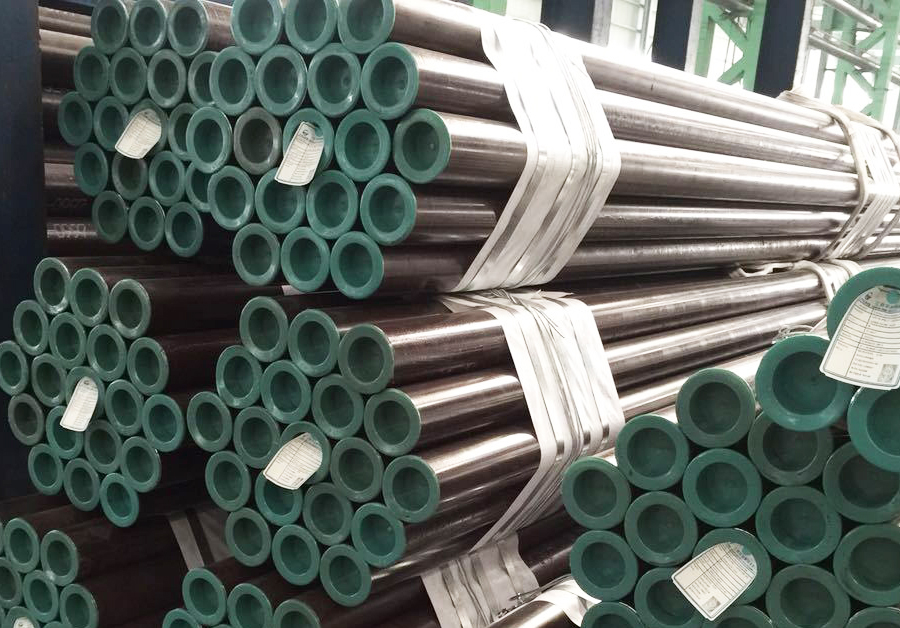
Standard off-the-shelf carbon steel pipes are structurally inadequate for sour wells. Procurement for these environments is strictly governed by international metallurgical standards designed specifically to mitigate hydrogen damage.
The primary regulatory framework is NACE MR0175 or ISO 15156. This universal standard dictates the acceptable material conditions, manufacturing processes, and testing requirements necessary to ensure pipeline longevity. For line pipes, the American Petroleum Institute provides specific guidelines under the API 5L specification. Operators must procure pipes that strictly conform to API 5L Annex H. This outlines the precise parameters for Sour Service environments.
From a metallurgical standpoint, chemical composition is heavily restricted to ensure steel cleanliness. Sulfur content must typically be kept below 0.002 percent. Excess sulfur leads to the formation of manganese sulfide inclusions. These inclusions elongate into stringers during the rolling process, creating ideal sites for crack initiation. Similarly, phosphorus is usually restricted to below 0.015 percent to prevent centerline segregation. Hardness restrictions are equally critical. The maximum allowable hardness for carbon steel pipes is strictly capped at 22 HRC on the Rockwell Hardness Scale C. This ensures the steel retains sufficient ductility to withstand hydrogen exposure.
Recent market analyses and global drilling data indicate a definitive shift in pipeline engineering trends. With the global depletion of easily accessible crude and gas, energy companies are aggressively expanding into complex and highly sour reservoirs. This operational pivot has driven a massive surge in demand for advanced metallurgical solutions tailored to extreme environments.
Industry analysts note that manufacturers are heavily investing in advanced secondary refining capabilities. Techniques like vacuum degassing and ladle metallurgy are now standard for producing ultra-clean steel. The current trend highlights a move away from relying solely on excessively thick-walled, lower-grade carbon steels. Instead, there is a pronounced preference for highly refined, micro-alloyed seamless pipes manufactured via Thermomechanical Controlled Processing. These modern pipes can withstand multiphase fluid dynamics in extreme pressure scenarios without compromising safety or NACE compliance. This reflects a broader industry commitment to lifecycle reliability over initial material cost savings.
When evaluating materials for gathering systems, the API X52 Line Pipe frequently emerges as an industry favorite. As a mid-range carbon steel grade, it offers a specified minimum yield strength of 52,000 psi. However, a standard API 5L X52 pipe is not inherently equipped to handle hydrogen sulfide.
The critical distinction lies between standard X52 and its sour-resistant counterparts. These are typically designated with suffixes such as X52MS or X52QS. The letter S denotes sour service compliance. M indicates thermomechanical rolling, and Q indicates a quenched and tempered delivery condition. To transform standard X52 chemistry into a sour-resistant grade, manufacturers implement precise metallurgical adjustments. The carbon equivalent is tightly controlled to enhance weldability while preventing hard, brittle microstructures from forming.
When manufactured to Annex H specifications, this grade represents an ideal solution. Based on standard manufacturing capabilities, these pipes are readily available in outer diameters ranging from 2 inches up to 24 inches, with wall thicknesses spanning from Schedule 40 to Schedule 160. It strikes an optimal balance. It provides adequate yield strength to handle internal pressures while maintaining the high ductility and low hardness necessary to resist cracking.
Selecting the appropriate material grade requires engineers to balance mechanical pressure requirements against the inherent resistance of the material to hydrogen embrittlement. As yield strength increases, hardness typically increases as well. This inversely affects cracking resistance.
Let us look at a direct comparison of material grades for an Onshore Field gathering network:
Material Grade | Yield Strength | Hardness Control | Sour Service Suitability | Typical Application |
|---|---|---|---|---|
API 5L Grade B | 35,000 psi | Easy to keep below 22 HRC | Good, but requires thick walls | Low-pressure gathering lines |
API 5L X42 | 42,000 psi | Very manageable | Excellent ductility | Moderate pressure onshore lines |
API 5L X52MS / X52QS | 52,000 psi | Optimal balance | Highly Recommended | High-pressure sour gathering networks |
API 5L X65 / X70 | 65,000+ psi | Extremely difficult | High risk of localized hard spots | Deepwater or specialized clad lines |
Lower strength grades, such as API 5L Grade B and X42, exhibit excellent natural ductility. Their inherent softness makes it relatively easy to maintain hardness below the 22 HRC NACE limit. However, operating at high pressures with these grades requires significantly thicker pipe walls. This increases material weight and welding complexity.
Mid-range grades, like X52 and X56, occupy the operational sweet spot. They offer a substantial increase in pressure containment capacity. This allows for thinner wall designs and reduced overall project costs, making them a highly cost-effective and reliable baseline.
Conversely, utilizing high-strength grades like X65 or X70 in sour environments presents significant challenges. Achieving high yield strength while keeping hardness below 22 HRC requires flawless manufacturing controls and advanced micro-alloying. Any deviation in the heat treatment process can result in localized hard spots that will rapidly fail in a sour well. In extreme scenarios where hydrogen sulfide partial pressures are exceptionally high alongside high temperatures, engineers must transition to Corrosion Resistant Alloys.
Procuring seamless pipes for sour service requires stringent verification. Manufacturers must provide documented empirical evidence that the pipe can withstand exposure over its intended lifecycle. Standard factory testing is simply insufficient.
Laboratory testing is mandatory to validate the metallurgical design. Hydrogen-Induced Cracking testing involves immersing pipe samples in a synthetic ocean water solution saturated with hydrogen sulfide gas for 96 hours. Afterward, they are examined for crack sensitivity. Sulfide Stress Cracking testing subjects specimens to a constant tensile load in an acidic solution for 720 hours to ensure no macroscopic cracking occurs.
Beyond laboratory simulations, advanced Non-Destructive Testing methods are applied to the entire pipe body. Ultrasonic Testing is utilized to detect internal flaws, such as laminations or voids. Electromagnetic Inspection detects surface imperfections. Finally, every pipe joint must undergo hydrostatic testing to verify its burst strength under extreme water pressure, simulating maximum operating conditions.
Buying pipes for operations dealing with toxic gases requires a highly reliable, transparent supply chain. Operators must demand comprehensive Mill Test Reports, preferably certified to EN 10204 Type 3.1 or 3.2. These documents provide the exact chemical composition, heat treatment records, and undeniable proof of NACE compliance for the specific heat of steel used.
Procurement teams should also verify that the mill possesses the advanced secondary refining capabilities required to produce ultra-clean steel. In addition, while the steel chemistry fights internal cracking, enhancing the lifespan of the pipeline often involves applying external anti-corrosion coatings, such as Three-Layer Polyethylene. Utilizing internal epoxy linings designed specifically for aggressive environments is also highly recommended.
Logistics and handling must be meticulously managed. Transporting seamless pipes to the installation site requires immense care. Any mechanical damage, such as deep gouges or dents from improper lifting, can act as severe stress concentrators. These will initiate cracking once the pipe is operational.
Given the severe structural damage caused by hydrogen sulfide, selecting the appropriate piping infrastructure is a critical decision that demands highly engineered materials. Sour wells require pipes boasting ultra-clean chemical compositions, strict hardness controls, and uniform microstructures. By eliminating weld seam vulnerabilities, seamless pipes provide the ultimate foundation for safe fluid transport. While various grades exist, mid-range options like the API X52 stand out as highly reliable solutions for onshore operations when manufactured to strict sour service annexes.
For procurement teams and engineers looking to secure fully compliant, ultra-clean infrastructural materials, partnering with an experienced manufacturer is vital. You can find premium sour service line pipes tailored to your specific pressure and environmental requirements at THX Special Steel. Explore their comprehensive range of solutions and secure reliable materials for your next project at https://www.thxspecialsteel.com.
Standard pipes are designed for general fluid transportation under normal conditions. In contrast, sour service pipes undergo incredibly strict chemical controls, specifically targeting ultra-low sulfur and phosphorus levels. They also receive specialized heat treatments to maintain a low hardness level under 22 HRC. This is critical for preventing hydrogen-induced cracking in highly corrosive environments.
No, a standard API X52 pipe is not suitable for sour environments. If you are operating in a sour well, you must specify a pipe manufactured specifically for sour service. These typically carry designations like API 5L X52MS or X52QS. These specific grades comply with NACE MR0175 standards and possess the necessary metallurgical purity to resist cracking.
Welded pipes feature a heat affected zone running along the longitudinal weld seam. Due to the thermal cycling of the welding process, this area often suffers from varying hardness levels and irregular microstructures. This makes the seam highly susceptible to localized corrosion and Sulfide Stress Cracking. A seamless pipe offers a uniform, continuous structure, completely eliminating this dangerous weak point.
This cracking occurs when atomic hydrogen, a natural byproduct of the corrosive electrochemical reaction between hydrogen sulfide and carbon steel, permeates the metal crystalline lattice. When the pipeline is subjected to tensile stress from internal fluid pressure or external installation forces, this trapped hydrogen causes the steel to become extremely brittle. This leads to sudden and catastrophic cracking.
Harder steels are inherently more brittle, making them far more susceptible to hydrogen embrittlement. International NACE standards typically limit the hardness of carbon steel pipes to a strict maximum of 22 HRC. Maintaining hardness below this threshold ensures the steel retains sufficient ductility to safely absorb stress and withstand prolonged exposure to corrosive elements.
The required wall thickness depends heavily on the internal operating pressure and the specific material grade chosen. For sour service applications utilizing mid-range grades like X52, engineers frequently specify Schedule 80 to Schedule 160. Thicker walls provide a larger safety margin against internal pressure and potential localized corrosion.
Thermomechanical Controlled Processing refines the steel grain structure through precise temperature control during the rolling phase. This advanced manufacturing technique enhances both the yield strength and fracture toughness of the pipe. It achieves this without relying on high carbon content, making it significantly easier to maintain the strict hardness limits required for sour environments.


