
Views: 0 Author: Site Editor Publish Time: 2026-10-13 Origin: Site


Procurement managers and engineering teams often face severe sticker shock when comparing initial quotes for industrial steel tubing. A common question inevitably arises during the material selection process. Why is there a massive price gap between standard hot-rolled tubes and a premium precision cold drawn seamless pipe?
Cheaper alternatives certainly flood the market. However, they frequently fail in high-stakes environments. Exact specifications and unyielding structural integrity are not optional in these scenarios. The higher cost of specialized tubing ties directly to a highly complex manufacturing ecosystem. This specific production method yields unmatched exactness. It delivers superior mechanical properties that standard pipes simply cannot replicate.
Ultimately, these advanced metallurgical factors save organizations substantial capital. They eliminate the need for expensive secondary machining. More importantly, they prevent catastrophic system failures in the field. This technical guide breaks down the exact cost drivers behind these premium materials. We compare standard manufacturing methods against advanced cold working. You will understand the true value of strict tolerances and why critical infrastructure relies heavily on this specific industrial material.
Complex Manufacturing: Advanced cold processing requires multiple passes, specialized tooling, and chemical treatments. Intermediate annealing significantly increases labor, time, and energy expenditures.
Unmatched Precision: The premium price guarantees exceptional exactitude and strict wall consistency. This virtually eliminates expensive and time-consuming secondary machining operations.
Superior Strength: Working metal at room temperature alters its grain structure. This increases tensile and yield strength, allowing engineers to design systems with thinner walls without sacrificing integrity.
High-Stakes Reliability: For critical pressure applications, the high upfront cost mitigates severe risks of leaks, bursts, and total system failures.
Total Cost of Ownership: These engineered components offer a substantially higher return on investment. They reduce material waste, lower processing costs, and extend equipment lifespans.
Understanding the price premium requires defining what makes this product fundamentally different from standard steel cylinders. For decision-makers and engineers evaluating technical specifications, the distinction lies in the rigorous refinement of the raw material.
All seamless pipes begin their lifecycle in a remarkably similar manner. The process starts on the foundry floor with a solid steel billet. This billet is heated to extreme temperatures and pierced through the center to create a hollow tube. Engineers refer to this initial stage as hot rolling or hot piercing.
At this juncture, the tube possesses a basic cylindrical shape but lacks exact precision. Standard seamless pipes often stop at this stage. The metal forms at high temperatures and cools unevenly. This leaves a relatively rough surface finish, loose tolerances, and potential inconsistencies in metal thickness. For basic structural applications, a hot-rolled finish is perfectly acceptable.
Transforming a standard hot-rolled tube into a precision-engineered product requires further processing at room temperature. The hollow tube is mechanically pulled through a highly precise external die and over an internal mandrel. The rigorous cold drawing process is executed without heating the steel. Therefore, the operation demands massive mechanical force and meticulous environmental control.
This highly controlled step refines the overall shape, exact size, and surface quality of the pipe. It elevates the steel to a premium grade that meets incredibly strict engineering tolerances.
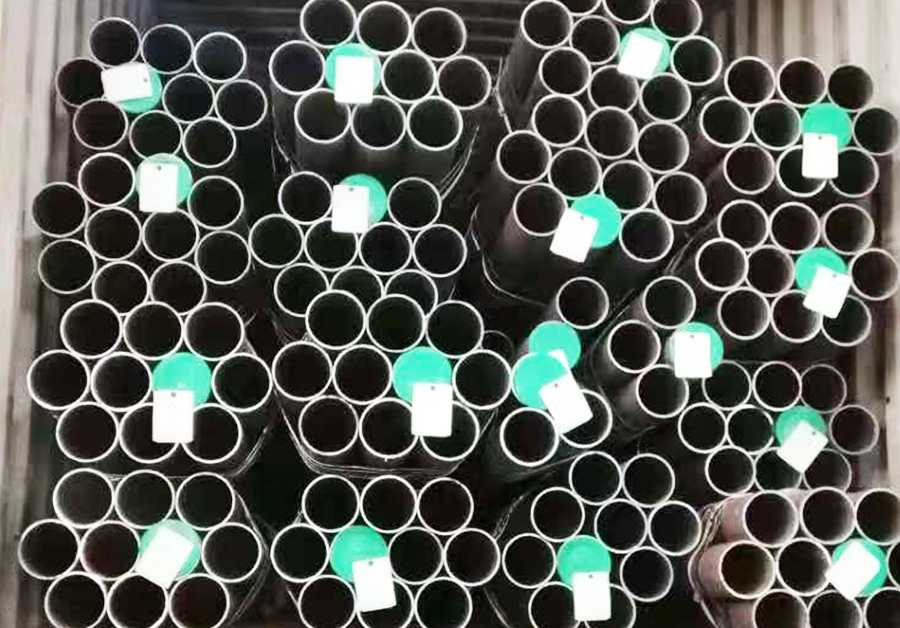
The premium price tag is not an arbitrary markup. It directly reflects a resource-intensive manufacturing environment. Here is a detailed breakdown of the specific cost drivers.
Hot rolling operates as a rapid, single-stage operation. Drawing steel at room temperature, by contrast, is a methodical multi-step process. Before the tube can approach the drawing bench, it must undergo acid pickling. This strips away any oxide scale left from the hot rolling phase. Technicians then treat it with a phosphate coating and specialized saponification lubricants to reduce friction.
Steel hardens as it deforms. It cannot be drawn to its final size in a single pass. The metal requires multiple drawing passes. Between each pass, the pipe must be thermally treated in an annealing furnace. This relieves internal stresses and restores ductility. Each chemical treatment and thermal cycle adds significant labor, energy, and time to the final invoice.
Achieving micrometer-level dimensional accuracy demands a massive investment in tooling. The dies and mandrels utilized in the drawing process are typically forged from expensive tungsten carbide. This material resists wear and maintains exact shapes under extreme pressure.
Maintaining a highly uniform wall thickness is notoriously difficult. The dual-action restriction of the die on the outside and the mandrel on the inside ensures perfect geometry across the entire pipe length. This level of exactitude requires constant quality control and frequent tooling replacements. Production costs inevitably rise as a result.
The metallurgy of cold working fundamentally changes the physical characteristics of the steel. Forcing metal through a die at room temperature triggers strain hardening. This process compresses and realigns the crystalline grain structure of the steel. It significantly amplifies hardness, yield strength, and ultimate tensile strength.
Consequently, engineers can utilize thinner components to handle the same pressure ratings. This reduces the overall weight of the final assembly. Achieving this specific metallurgical state requires precise engineering controls that standard pipes simply bypass.
Standard hot-rolled pipes feature a scaly, oxidized surface. Manufacturers must aggressively machine this away if a smooth finish is required. Cold processing produces a smooth, mirror-like finish on both the interior and exterior of the tube.
This premium surface quality is highly sought after in mechanical applications. Procuring a component with an optimized surface finish straight out of the gate saves substantial capital. End-users avoid burning budgets on expensive secondary operations like honing, internal boring, or polishing.
Mass production inherently lowers costs. This explains why standard hot-rolled or welded pipes are so inexpensive. Foundries churn them out continuously at breakneck speeds. Cold drawing is a meticulous, batch-oriented process. Operators intentionally throttle drawing speeds to prevent material tearing and ensure uniform deformation.
Quality standards remain incredibly rigorous. The rejection rate for minor imperfections is naturally higher. Lower production yields and slower throughput dictate that manufacturers must charge a premium to maintain operational viability.
Procurement teams frequently analyze competing quotes between standard hot-rolled seamless pipes and precision alternatives. Understanding the fundamental differences in cost versus long-term value is critical for making an informed purchasing decision.
Feature | Hot Rolled Seamless Pipe | Precision Cold Drawn Seamless Pipe |
|---|---|---|
Manufacturing Speed | Fast, single-stage process | Slow, multi-stage batch process |
Dimensional Tolerance | Loose, suitable for basic structures | Strict, micrometer-level accuracy |
Surface Finish | Rough, oxidized, scaly | Smooth, bright, mirror-like |
Tensile Strength | Standard baseline strength | Significantly enhanced via strain hardening |
Secondary Machining | Heavy machining required for precision | Minimal to none required |
The choice between the two materials ultimately hinges on performance parameters. Hot-rolled pipes suit basic structural uses where precision is not a primary concern. Construction scaffolding or basic fluid transport are prime examples. However, modern engineering demands strict tolerances. Mechanical components require an exact fit, high pressure resistance, and smooth interaction with moving parts. In these cases, precision tubing becomes non-negotiable.
Engineers often debate the merits of welded tubes as a cost-saving measure. While undeniably cheaper, welded tubes carry hidden risks. They are highly unsuitable for bottom-of-the-funnel, high-stakes purchasing decisions.
Manufacturers produce welded pipes by rolling a flat sheet of steel and welding the seam. This weld seam introduces a metallurgical anomaly, regardless of how perfectly it is executed. It acts as a potential site for stress concentration, accelerated corrosion, and microscopic fracturing. In high-vibration or high-pressure environments, the seam is always the first point of failure.
A seamless pipe possesses uniform structural integrity across its entire circumference. It lacks a welded seam. Therefore, it comfortably withstands 20 to 30 percent higher working pressures than a welded counterpart of the exact same material and dimensions. Cold processing further fortifies this integrity. It remains the only reliable choice for critical safety-focused applications where a rupture could result in catastrophic damage.
Recent industry analyses highlight a massive global shift in manufacturing supply chains. This shift directly impacts material pricing. The aerospace, electric vehicle, and deep-water energy sectors aggressively push for lighter, more resilient materials. Consequently, the demand for high-tolerance seamless tubing has surged exponentially.
Market reports indicate an ongoing push for miniaturization in hydraulic and pneumatic systems. This forces design engineers to abandon standard commercial tubing altogether. The rising cost of raw alloys combines with a bottleneck in specialized drawing facilities capable of meeting extreme tolerances. This dynamic drives market prices upward.
Leading industry experts agree on a crucial point. Increased upfront investment is rapidly offset by a drastic reduction in catastrophic field failures. Component lifespans in extreme, unforgiving environments are significantly extended.
Connecting technical specifications to real-world use cases vividly demonstrates the necessity of higher upfront costs. Substituting a precision component with a cheaper alternative borders on negligence in certain heavy industries.
Producing high-pressure storage vessels is one of the most demanding applications for this material. A premium Gas Cylinder Pipe serves as the gold standard here. Storing volatile, highly pressurized gases demands absolute structural perfection. Typical specifications for high-pressure gas cylinder pipes utilize 34CrMo4 or 37Mn steel grades. They require an outer diameter ranging from 140 millimeters to 406 millimeters, with a wall thickness spanning 4 millimeters to 30 millimeters.
A slight variation in metal thickness or a microscopic internal defect could lead to a catastrophic burst under pressure. Precision processing ensures every square inch of the cylinder wall meets strict safety codes. The vessel withstands thousands of pressurization cycles without succumbing to metal fatigue.
Imagine a heavy-duty hydraulic excavator operating in sub-zero temperatures. Hydraulic systems rely on perfect internal seals to generate lifting force. The interior of the cylinder barrel cannot deviate by even a fraction of a millimeter. If the surface is slightly rough, piston seals will shred rapidly.
This leads to fluid blow-by and a total loss of system pressure. The natural internal smoothness provided by precision drawing makes it the definitive choice for long-lasting hydraulic performance.
Weight and strength balance on a razor's edge in the automotive and aerospace sectors. Precision seamless tubes are frequently deployed in critical components. Shock absorbers, steering columns, and drive shafts rely on them. The enhanced strength-to-weight ratio allows manufacturers to thin out component walls without losing structural integrity. This directly contributes to lighter, safer, and more fuel-efficient vehicles.
Astute procurement teams shift their mindset from the initial sticker price to the Total Cost of Ownership. Viewed through this lens, premium material often proves to be the more economical choice.
Tubing arrives at the facility manufactured to exact micrometer specifications. Buyers save tens of thousands of dollars on CNC machining, internal honing, and turning operations. Dimensions are guaranteed. Scrap metal waste generated from out-of-spec raw materials drops to near zero.
Higher tensile strength and flawless surface quality directly translate to less wear and tear on interacting moving parts. O-rings and polyurethane seals inside a perfectly smooth cylinder last exponentially longer. This drastically lowers ongoing maintenance costs. It reduces emergency downtime and protects the manufacturer's brand reputation in the market.
Understanding material value is only half the battle. Ensuring you actually receive premium quality requires vetting your supply chain meticulously. Use this practical checklist when evaluating suppliers.
1. Verify Tolerance Capabilities: Do not accept vague promises. Confirm if the supplier can guarantee a strict wall tolerance of plus or minus 5 percent for your specific outer diameter, rather than the industry standard 10 percent.
2. Demand Non-Destructive Testing: Buyers must actively seek out suppliers that integrate rigorous quality assurance protocols. Look for comprehensive non-destructive testing like ultrasonic or eddy current testing. This guarantees zero internal micro-cracks.
3. Review Mill Test Certificates: Ensure the supplier strictly adheres to recognized international manufacturing standards, including DIN, EN, and ASTM specifications. A reputable supplier always provides detailed mill test certificates to validate chemical composition and mechanical properties before shipping.
The higher price of a precision cold drawn seamless pipe is a direct, quantifiable reflection of its meticulous manufacturing journey. It offers superior dimensional accuracy and enhanced mechanical strength. It is an engineered solution designed specifically to solve complex mechanical problems.
Safety, precision, and reliability are strictly non-negotiable in heavy industries. Opting for cheaper hot-rolled or welded alternatives is a dangerous false economy. Hidden costs of secondary machining, rapid equipment wear, and potential catastrophic failures quickly eclipse any initial savings realized at the procurement desk.
Engineering teams and purchasing managers must evaluate project-specific tolerance and system pressure requirements very carefully. Visit THX Special Steel to explore high-pressure resistant gas cylinder seamless pipes. Contact a trusted, specialized steel supplier for a customized technical quote and secure the structural integrity your high-stakes applications demand.
It requires numerous additional manufacturing steps. Hot rolling is a fast, single-step process. Cold processing involves acid washing, specialized lubrication, drawing through expensive tungsten carbide dies, and multiple heat treatments. These extra steps add significant labor, time, energy, and tooling costs to the final product.
Depending on the specific international standard and the outer diameter, wall tolerances can be tightly controlled within plus or minus 5 percent to 10 percent. This is significantly tighter and more uniform than the 12.5 percent or greater variations typically found in standard hot-rolled pipes.
Absolutely not. Gas storage vessels operate under extreme, repetitive pressure cycles. The longitudinal seam in a welded pipe introduces a metallurgical weak point that creates a severe risk of rupture. Seamless construction is legally and structurally mandatory for high-pressure gas storage safety.
Mechanically forcing the steel through a die at room temperature causes a phenomenon known as strain hardening. This action compresses and realigns the internal grain structure of the metal. It significantly increases both the yield strength and tensile strength of the pipe compared to its original hot-rolled state.
Yes. The dimensional accuracy and the smooth, bright surface finish are already optimized during the drawing process. End-users can frequently bypass expensive, time-consuming secondary operations like internal boring, turning, or honing. This directly lowers internal manufacturing costs.
For high-stakes applications like gas cylinders, engineers typically specify high-strength alloy steels. Grades such as 34CrMo4, 37Mn, and 4130 are industry standards. These alloys offer exceptional toughness and respond incredibly well to the strain hardening effects of cold drawing.
Always request a Mill Test Certificate from your supplier. This document verifies the exact chemical composition and mechanical properties of your batch. Additionally, ensure the pipes have undergone Non-Destructive Testing, such as ultrasonic inspection, to confirm there are no hidden internal defects or micro-cracks.


