
Views: 0 Author: Site Editor Publish Time: 2026-10-30 Origin: Site


Designing industrial systems to convey volatile gases or high-temperature fluids under extreme stress requires strict material selection. It is a matter of critical engineering necessity rather than simple preference. A carbon steel seamless pipe stands as the definitive standard in these demanding environments. It offers a level of structural reliability that welded alternatives simply cannot match when subjected to severe internal forces.
The primary advantage of seamless piping lies in its extrusion process. Welded conduits are produced by rolling steel plates and joining the edges. In contrast, a seamless pipe is crafted from a solid cylindrical steel billet. This billet is heated until malleable and pierced by a rod to form a hollow tube. Bypassing the need for longitudinal seams ensures the resulting pipe features a perfectly uniform grain structure across its entire circumference. This continuity is vital for high-pressure scenarios. A weld seam acts as an inherent stress concentration point. It is a potential weak link where microscopic fatigue can easily propagate into catastrophic failure. Eliminating this risk allows the pipeline to naturally distribute internal outward hoop stress, providing superior containment during high-stakes operations.
Furthermore, carbon steel provides an exceptional balance of hardness and tensile strength. Industrial pipelines must frequently endure external mechanical shock, harsh vibrations, and shifting thermal loads. The ability of this alloy to absorb operational rigors while maintaining dimensional stability ensures the system will not succumb to deformation over time. The initial investment for seamless pipes is typically higher due to the complex manufacturing process. However, the long-term commercial value is substantial. Enhanced durability directly leads to fewer emergency repairs, minimized facility downtime, and a drastically lowered risk of hazardous environmental leaks.
Operating a facility safely requires engineers to move beyond intuition and rely on precise calculations. A pipe's capacity is primarily defined by its pressure rating, commonly known as the Maximum Allowable Operating Pressure. Operating beyond this limit guarantees system failure. The foundational math used here is Barlow's Formula. This equation maps the critical relationship between internal pressure, material yield strength, and the physical dimensions of the pipe.
Real-world field conditions are highly dynamic. Temperature acts as the most disruptive variable in these calculations because the yield strength of carbon steel is not a static constant. As operating temperatures rise, the steel becomes more ductile and less capable of resisting internal forces. This necessitates the application of a derating factor. A pipeline performing flawlessly at 2,000 PSI at room temperature will require a significant downward adjustment to its pressure limit once the internal fluid reaches 400 degrees Celsius. Engineers never rely solely on theoretical burst pressures. A robust safety factor is always applied to account for the unpredictable nature of pump surges, pressure hammer effects, and mechanical anomalies.
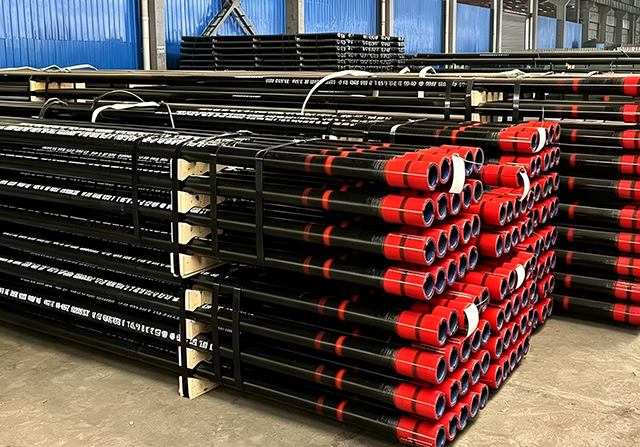
While material composition provides baseline strength, wall thickness acts as the primary structural reinforcement against bursting forces. It serves as the physical buffer between the inner and outer diameter, dictating how effectively the pipe distributes stress before reaching its elastic limit. In the industrial landscape, this thickness is categorized by the Schedule system—a designation that evolves alongside the nominal pipe size.
Standard plumbing often relies on Schedule 40. Such specifications are rarely sufficient for high-pressure industrial infrastructure. As system requirements escalate, engineers transition to Schedule 80, Schedule 160, or Double Extra Strong pipe to handle the load. A standard 4-inch pipe nearly doubles its wall thickness when moving from Schedule 40 to Schedule 160. This upgrade provides an exponentially higher threshold for pressure containment. Procurement teams must also remain vigilant regarding mill tolerances. Industry standards allow for a thin-wall variation of up to 12.5 percent. Therefore, burst calculations must always be based on the minimum possible wall thickness. This ensures that even the thinnest pipe in a delivered batch remains safe under maximum anticipated operating loads.
Procuring piping for high-pressure systems is a strictly regulated process. Generic steel is never an acceptable option. Standardization forms the bedrock of safety by ensuring every batch maintains a consistent chemical composition. Balancing carbon, manganese, and silicon is necessary to achieve the required mechanical properties. ASTM A106 serves as the gold standard for high-temperature and high-pressure steam lines. Grade B is the common industry workhorse, while Grade C is reserved for aggressive environments demanding higher tensile strength.
Currently, the industrial piping sector is experiencing a massive shift toward automated material verification and digital traceability. Modern refineries and deep-water platforms demand precise, immutable records tracking the steel from billet to finished product. As extraction environments grow harsher, the demand for seamless pipes with tighter wall thickness tolerances is surging. Engineers are actively moving away from baseline standards. They are opting for digitally certified materials that guarantee performance under severe, fluctuating thermal loads. This trend highlights a broader industry movement: prioritizing predictive safety over initial procurement savings.
The energy sector presents the most punishing environment for piping. Extreme reservoir pressures and corrosive downhole conditions necessitate strict adherence to the API 5CT standard. Unlike standard surface line pipe, these Oil Country Tubular Goods are engineered to withstand multiple stress vectors. They must hold back the internal pressure of hydrocarbons while resisting intense external crushing forces from deep rock formations and the massive tensile loads of the pipe string itself.
Within this framework, J55 tubing is frequently utilized as a highly reliable entry-to-mid-level solution. Premium J55 tubing offers a yield strength ranging from 55,000 to 80,000 PSI and a minimum tensile strength of 75,000 PSI. When dealing with outer diameters between 1.05 and 4.5 inches, this specific grade provides an exceptional balance of cost-efficiency and mechanical durability for shallow to medium-depth extraction. However, as drilling pushes into deeper, more complex reservoirs, engineers must upgrade to higher-performance grades like N80 or P110. These advanced grades provide the increased structural integrity necessary to ensure well safety in the face of escalating geological pressures.
To better understand how these materials stack up, engineers frequently rely on comparative grade analysis for high-pressure suitability:
Material Specification | Minimum Yield Strength | Typical Application | High-Pressure Suitability |
|---|---|---|---|
ASTM A106 Grade B | 35,000 PSI | Refineries, Power Plants, Steam Lines | Excellent for high-temperature surface facilities. |
API 5CT J55 | 55,000 PSI | Shallow to Medium Oil & Gas Wells | Strong baseline for standard downhole pressure. |
API 5CT N80 | 80,000 PSI | Deep Oil Wells, Sour Service Environments | Superior resistance to extreme crushing forces. |
Selecting the correct pipe is a methodical engineering process. It demands a rigid framework to avoid catastrophic oversights. You cannot simply select a pipe based on diameter alone. Follow these critical steps to ensure system integrity:
First, conduct a comprehensive audit of your operational demands. You must account for peak surge pressure, maximum fluid temperature, and potential chemical corrosivity. Once these boundary conditions are established, utilize accepted codes like ASME B31.3 to calculate the minimum required thickness. Always factor in the standard 12.5 percent mill tolerance to ensure your chosen schedule provides an honest margin of safety.
Second, prioritize material verification. A high-quality supplier must provide total transparency. Insist on Mill Test Certificates conforming to EN 10204 3.1 or 3.2 standards. These documents prove the chemical and mechanical properties of your specific batch.
Finally, mandate rigorous non-destructive testing. Pipes intended for high-pressure service should undergo mandatory hydrostatic testing. The pipe is physically stressed beyond its operating capacity to confirm no leaks exist. This should be paired with ultrasonic inspections to catch microscopic internal flaws that visual inspections will miss.
Selecting the right carbon steel seamless pipe is a foundational component of operational safety and system reliability. By carefully balancing the required pressure rating with precise wall thickness calculations and adhering to globally recognized API and ASTM standards, engineers can effectively mitigate the risks of catastrophic failure. Investing in certified materials is a proactive strategy to avoid industrial disasters, minimize downtime, and maximize long-term profitability.
When system failure is not an option, sourcing from a reliable manufacturer is your best defense. Explore the extensive range of certified carbon steel seamless pipes, J55 tubing, and premium OCTG solutions at THX Special Steel. Ensure your next high-pressure project is built on a foundation of uncompromising quality and engineered precision.
While advances in welding technology have improved the quality of longitudinal seams, seamless pipe remains the definitive choice for extreme-pressure environments. The absence of a weld seam eliminates the primary site of potential fatigue and rupture. This allows the pipe to handle internal stresses much more uniformly than a welded alternative.
There is no universal maximum pressure. Capacity is a direct function of the material grade, outer diameter, and wall thickness. By increasing the schedule—moving from Schedule 80 to Schedule 160, for example—the pressure threshold is significantly elevated. Specific heavy-wall configurations can be engineered to withstand pressures exceeding 10,000 PSI depending on the specific application.
Temperature drastically alters the mechanical properties of carbon steel. As the temperature of the conveyed fluid increases, the steel's yield strength decreases. Engineers must apply a temperature derating factor to their calculations. A pipe rated for high pressure at room temperature will have a significantly lower safe operating pressure at elevated temperatures.
These standards serve entirely different logistical functions. API 5L is primarily designed for line pipe used to transport oil and gas over long distances across surface terrains. In contrast, API 5CT is specifically designated for tubular goods used inside the wellbore. Downhole pipes must endure unique crushing, tensile, and pressure forces during active drilling and production.
The operational lifespan depends heavily on fluid corrosivity, operating temperature, and maintenance practices. In properly designed systems with non-corrosive fluids, seamless carbon steel can last for decades. However, in harsh environments containing hydrogen sulfide or abrasive particulates, the lifespan may be reduced unless internal protective coatings or corrosion inhibitors are utilized.
J55 is a standard carbon steel grade. While physically robust, it remains susceptible to environmental degradation over time. In environments involving sour service or highly corrosive fluids, carbon steel requires specific internal coatings or inhibitors. If the environment is too severe, engineers must select a more corrosion-resistant alloy to ensure long-term well integrity.


